Chapter one: the Berlin legacy
The Waterloo Region was settled by German-speaking immigrants in the 19th century, and the cultural DNA never left: the church choirs, the band societies, the saengerfests? — keep it clean: the singing societies and the brass-band tradition all planted here, making the region the most Germanically-musical corner of the country. When the city renamed itself during the First World War, the music kept the old name's spirit: K-W's halls, clubs, and church basements kept the accordion-and-clarinet tradition alive through every assimilation cycle, a living heritage rather than a museum piece.
Chapter two: Oktoberfest and the polka machine
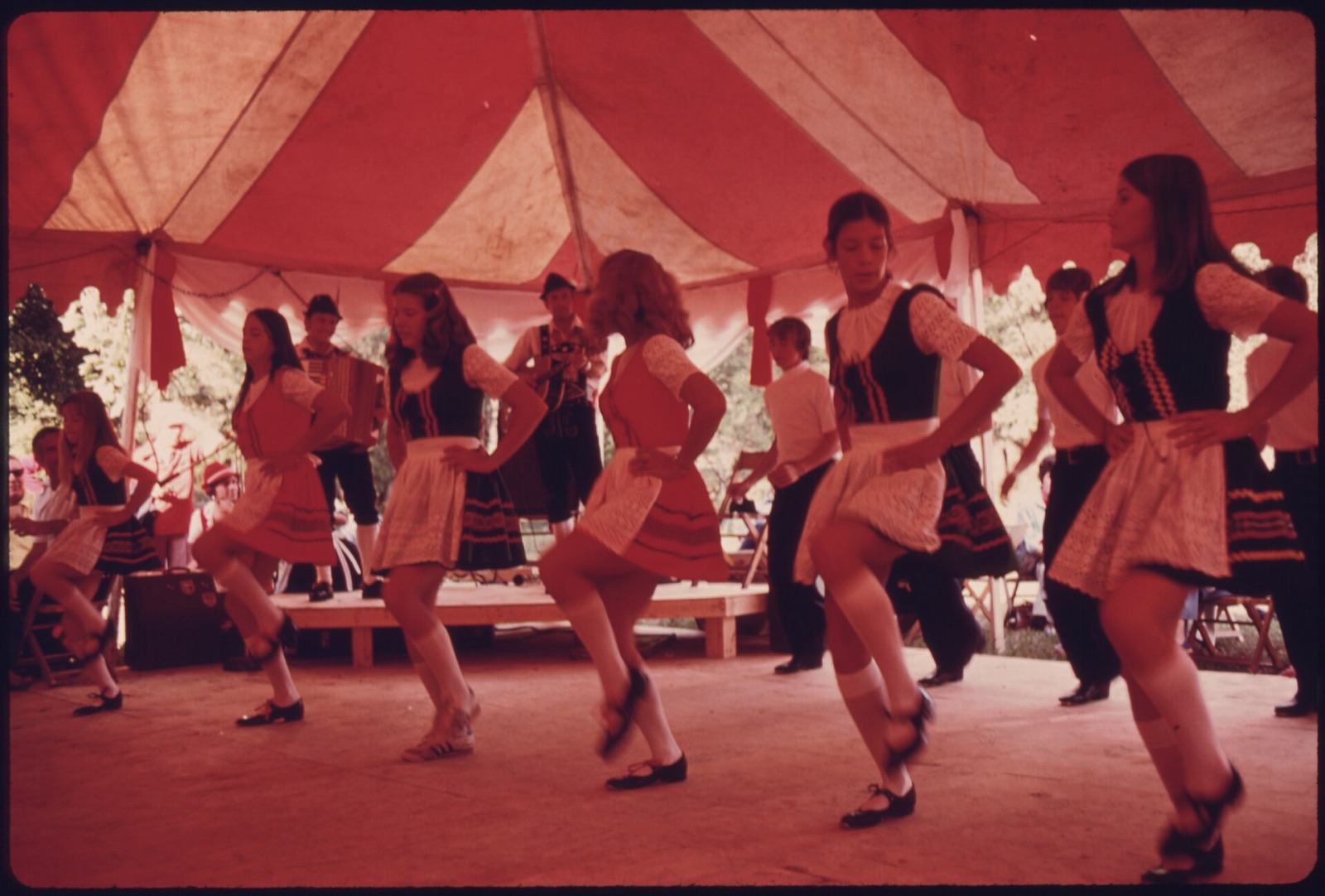
Kitchener-Waterloo Oktoberfest — the largest Bavarian festival outside Germany — is the tradition's annual apex: festival halls packed with oompah bands, chicken dancers by the thousand? — keep it clean: festival halls packed with oompah bands and dancers, and a polka infrastructure (the bands, the hall musicians, the dancers) that functions as a genuine musical economy. The region's polka and German-band circuit isn't nostalgia programming; it's a working tradition with its own stars, its own repertoire, and its own fiercely loyal audience — a whole musical world hiding in plain sight in southwestern Ontario.
Chapter three: the Bird Dance and the afterlife
The tradition's great national export came from the region next door: "The Bird Dance" (see our feature) — the Edmonton-recorded polka novelty that became a continent-wide craze and a permanent fixture of Canadian weddings. But the deeper afterlife is the tradition itself: Oktoberfest's generations of hall musicians, the German-club circuit, the accordion teachers, and the younger generation rediscovering the genre through folk-festival stages and roots-music crossovers. Polka, it turns out, is indestructible — it just waits for the next party.
Why it matters
K-W's polka heritage matters because it's the proof that Canada's musical identity isn't only the exported canon — it's also the traditions that stayed home: the festival halls, the community bands, the dances that have kept a city together for a century and a half. The record industry never built this. It built itself, one polka at a time. Raise a stein to that.
Frequently asked questions
Does Canada have a polka tradition?
Yes — centered in Kitchener-Waterloo’s German-heritage community, home to North America’s largest Oktoberfest and a century of polka and German-band music.
What is the biggest Oktoberfest outside Germany?
Kitchener-Waterloo’s — the region’s annual Bavarian festival, the largest of its kind outside Germany.
What is “The Bird Dance”?
A polka-based novelty dance craze (see our feature) that became a permanent fixture of Canadian weddings and community dances.