The best of "O Canada"
- José Feliciano's guitar "O Canada" (2010 World Series) — The blind Puerto Rican virtuoso performed the anthem as a solo guitar instrumental before a Canadian? — keep it clean: performed it as a fingerstyle guitar instrumental at a championship game in Toronto — hushed, virtuosic, and instantly beloved. Proof that the anthem survives any respectful interpretation.
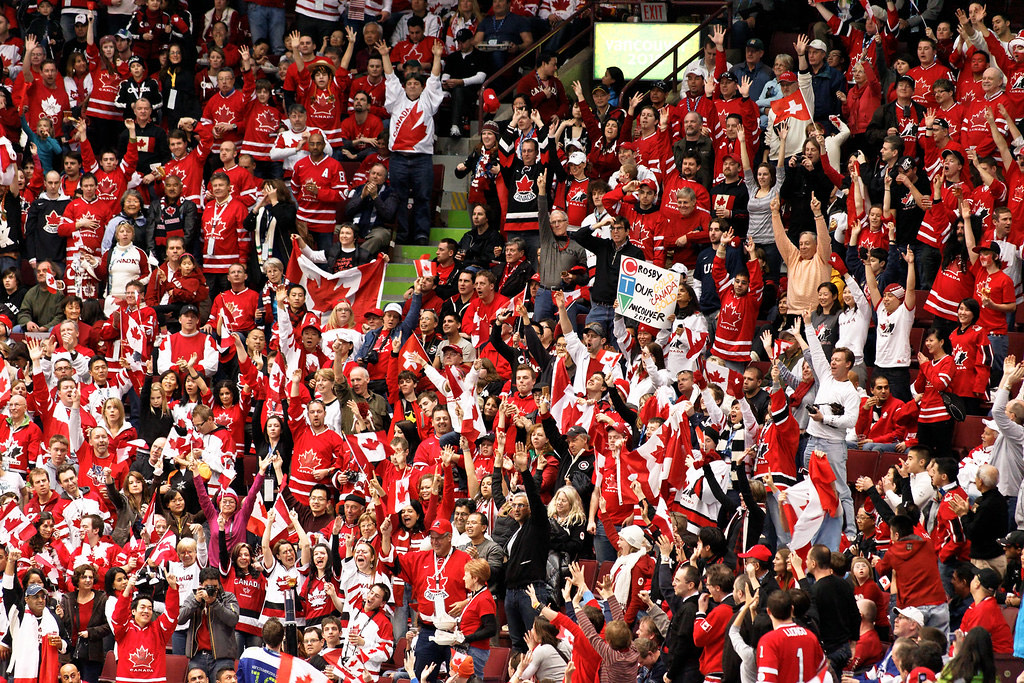
- The bilingual standard-setters — The greatest anthem performances in Canadian history are often the simplest: a singer who nails both official languages, a crowd that carries the last line, and the roar on "we stand on guard for thee." The anthem at its best is participatory, not performed.
- The anthem in Indigenous languages — Performances of "O Canada" in Inuktitut, Cree, and other Indigenous languages (see our feature on the anthem in Indigenous languages) have repeatedly stopped the country — performances that honor the anthem by widening what it includes.
- The 2010 Olympic gold-medal nights — The anthem sung by players — skaters mid-ice, hoarse, arms around each other, words optional — remains the gold standard of Canadian anthem performance: no technique, total meaning.
- The arena organists — The anonymous heroes who've played ten thousand renditions in cold rinks, modulating for crowd speed, keeping the tempo moving when 18,000 people want the last note forever? — keep it clean: keeping the tempo when the crowd wants to stretch the last line. Craft in its humblest form.
The worst — or at least the most debated
- The lyric-rewrite protest (2016 MLB All-Star Game) — One member of a performing quartet changed the anthem's lyric mid-performance as a political statement ("all lives matter" in place of a line) — an unauthorized edit that ignited a national debate about protest, platform, and whose anthem it is. Whatever the politics: the crowd didn't buy it, and the discourse? — keep it clean: the debate ran for weeks.
- The visiting-singer flubs — American anthem singers mangling "O Canada" before Canadian games is a comic genre unto itself — lyric substitutions, timing collapses, and the brave face while 20,000 Canadians mouth the correct words. The crowd's patience is legendary; its singing-along-to-correct is merciless.
- The over-singers — The melismatic? — keep it clean: The ornament-heavy renditions that turn a sturdy march into a vocal obstacle course — technically impressive, spiritually exhausting, and always, always booed in the bar afterward? — keep it clean: and always debated afterward.
- The forgotten-lyric moments — Even professionals blank: the frozen half-second, the recovery, the crowd rescue. Universally forgiven, instantly memorable.
The verdict
"O Canada" rewards sincerity and punishes showing off — which is, not coincidentally, the country's entire aesthetic philosophy. The best performances are the ones where the singer gets out of the way and lets the crowd do what it's been practicing its whole life. The worst are the ones where someone tries to improve it. It doesn't need improving. It needs singing — both languages, one voice, everyone in.
Frequently asked questions
What is considered the best “O Canada” performance?
José Feliciano’s 2010 guitar instrumental is the critical favorite; the purest versions are often the crowd-led bilingual singalongs.
What was the most controversial anthem performance?
The 2016 All-Star Game lyric change, which sparked a national debate about protest and the anthem.
Has “O Canada” been performed in Indigenous languages?
Yes — performances in Inuktitut, Cree, and other languages have become some of the anthem’s most celebrated moments.