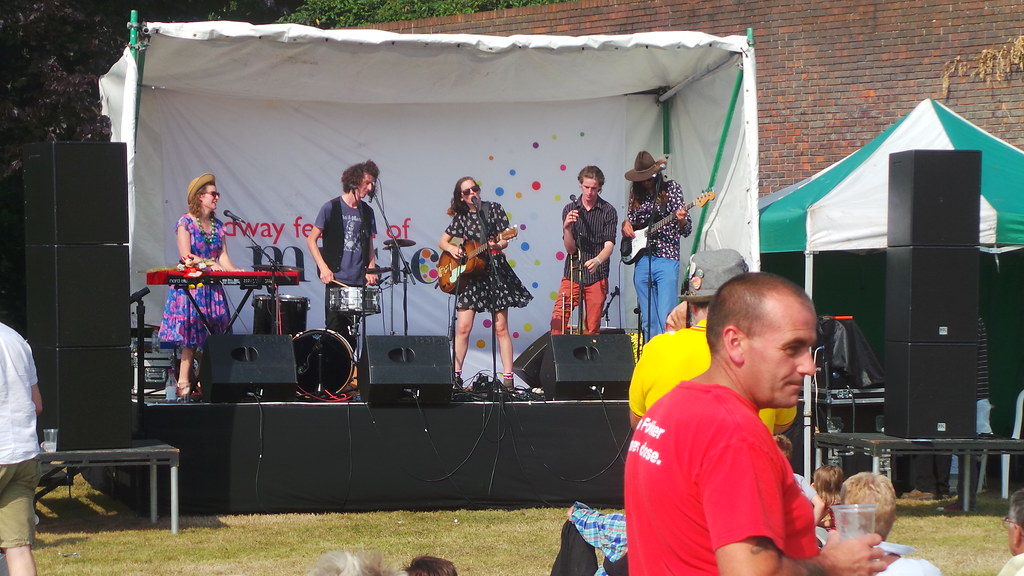
The pioneers: before the phrase existed
In the 60s and 70s, women in Canadian rock were exceptions who had to be undeniable. Joni Mitchell and Buffy Sainte-Marie proved women could be writers at the highest level — the songwriter's songwriter and the activist firebrand, respectively — while rock radio treated the electric guitar as male property. Rita MacNeil sang Cape Breton's working heart. Carole Pope fronted Rough Trade, Toronto's most confrontational band of the late 70s, singing about desire and power with a frankness that scandalized the mainstream and liberated everyone watching. Lorraine Segato co-led the Parachute Club, whose “Rise Up” made women and queer dancers and multicultural joy the face of Toronto pop in 1983. Lee Aaron claimed metal's throne; Sass Jordan carried blues-rock through the 80s and 90s with one of the great Canadian voices.
The 90s: the alternative correction
Alanis Morissette's Jagged Little Pill (1995) is the commercial earthquake — proof that a woman's anger, specificity, and authorship could sell 33 million records — but the scene around it was already full of builders: Jann Arden, Sarah McLachlan (whose Lilith Fair rewrote the touring business), k.d. lang (who'd already forced country and pop to make room), Sloan-era scenes where women ran labels, zines, and stages. Caroline Marchand and the women of Quebec's chanson-rock carried their own parallel revolution.
The 2000s and after: inheritance and explosion
The indie era made space structural rather than exceptional. Emily Haines fronted Metric from art-school obscurity to arena lights while co-writing Broken Social Scene's anthems. Feist became a global songwriter on her own terms. Tegan and Sara built a two-decade career and then used it to fund the next generation. Today, women headline every level of the Canadian industry — from Alvvays' jangle to The Beaches' rock revival to Backxwash's Polaris-winning horror-rap — and the question has finally changed from “why her?” to “who's next?”
Why this history matters
Every barrier broken was broken by someone specific, usually without institutional support: Pope performing under police-watch levels of controversy in 1979; Aaron facing a metal scene that didn't want her; Haines grinding through the indie wars when the money and the credit flowed elsewhere. Knowing their names isn't trivia — it's the difference between thinking today's landscape arrived naturally and knowing it was built, brick by brick, set by set, by women who refused to leave.
Frequently asked questions
Who was the first big woman rocker in Canada?
Carole Pope (Rough Trade) and Lorraine Segato (Parachute Club) were the groundbreaking frontwomen of the late 70s and early 80s; Joni Mitchell and Buffy Sainte-Marie had already built the songwriting foundation in the 60s.
What did Lilith Fair change?
Sarah McLachlan's festival proved women-led tours could out-gross the industry standard, forcing promoters and radio to rewrite assumptions that had stood for decades.
Who are the leading women in Canadian rock today?
Metric's Emily Haines, Feist, Tegan and Sara, Alvvays' Molly Rankin, The Beaches, and Polaris winner Backxwash span the current landscape — standing on the path the pioneers cleared.