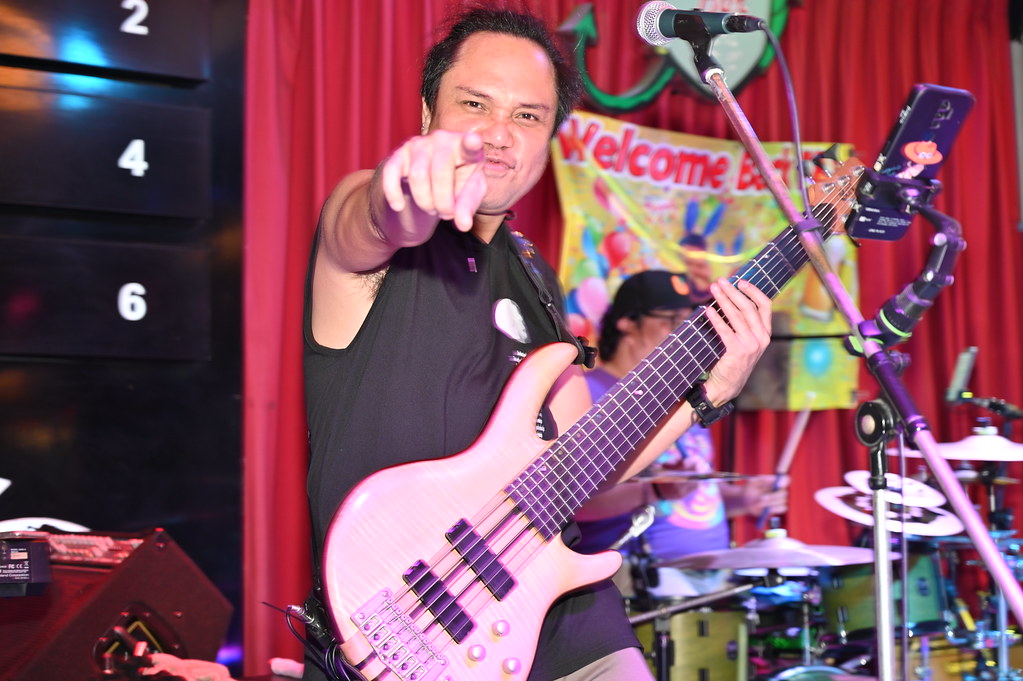
The launch pads
- The Horseshoe Tavern (Toronto) — The country's most reliable career incubator: generations of acts treated the Queen West room's weekly residency model as their finishing school, and the legend list is longer than this article (see our Horseshoe feature). Fifty people on a Tuesday; 20,000 by Friday, eventually.
- The El Mocambo (Toronto) — Punk's rite of passage and new wave's launchpad (see our feature): play the El Mo, get reviewed, get signed, get famous. The upstairs/downstairs rooms launched more careers than most labels.
- The Marquee (Halifax) — The Halifax explosion's main artery: Sloan, Thrush Hermit, and the whole 90s wave became bands on the Grafton Street stage (see our features). Four hundred capacity; a nation's worth of influence.
- The Smilin' Buddha (Vancouver) — Where Vancouver punk learned to walk: D.O.A. and the Pointed Sticks took their first steps in the Hastings Street basement, and the West Coast lineage followed (see our features).
- The West End Cultural Centre (Winnipeg) — The prairie listening room that functioned as a career conservatory: Winnipeg's endless supply of road-ready acts (see our Winnipeg feature) passed through its humble stage with a reverence usually reserved for cathedrals.
- Grossman's Tavern (Toronto) — The blues classroom (see our feature): eighty years of jam nights have graduated more working musicians than any conservatory in the country — the venue where players learn the craft that later fills arenas.
- Foufounes Électriques (Montreal) — The Foufs (see our feature): forty years of punk and metal debuts, where Montreal's heavy underground tested itself nightly against the city's most demanding room.
- The everywhere-elses — The record-store back rooms, church basements, legion halls, and barns of a hundred small towns: the Marquees and Horseshoes of places too small for a scene, producing the players who eventually found one. (See our tiny-venue and weird-venues features.)
Why tiny rooms make big careers
The arithmetic is simple: a 50-person room leaves nowhere to hide. No production to dazzle, no crowd momentum to ride — just songs and a band, examined at arm's length by strangers. Acts that survive that examination graduate to 200-person rooms already possessing the only thing that scales: the ability to make people care. The arenas are full of acts who learned that skill in rooms the size of a living room. The tiny venues aren't the minors. They're the forge.
Frequently asked questions
What small venues launched famous Canadian bands?
The Horseshoe and El Mocambo (Toronto), the Marquee (Halifax), the Smilin’ Buddha (Vancouver), and the West End Cultural Centre (Winnipeg) top the list.
Do tiny venues still matter for new artists?
More than ever — as gatekeepers fragment, the small-room circuit remains the only proving ground where talent meets strangers face to face.
Why are small clubs important to music scenes?
They strip away production and expose the fundamentals: songs, performance, and the ability to hold a room — the skills that scale to arenas.