Chapter one: the fair becomes a concert venue
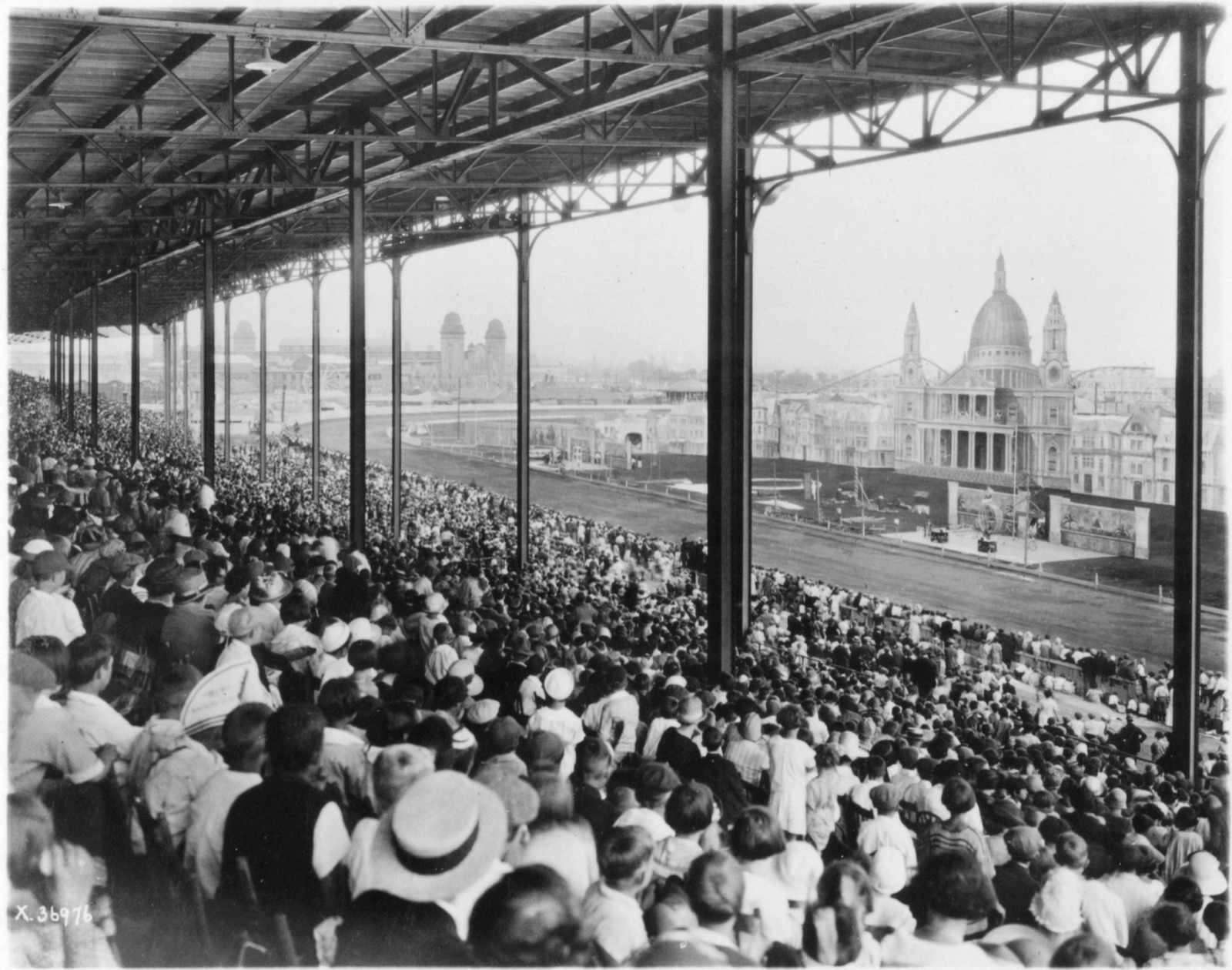
The CNE had music from its earliest days — bandshells, midway acts, military tattoos? — keep it clean: bandstands and midway entertainment — but the Grandstand era turned the fair into a genuine concert destination: a purpose-built stage drawing crowds in the tens of thousands, with the exhibition's carnival sprawl as the world's strangest pre-show. The format was irresistible: one ticket, the fair and the show; teenagers could ride the Zipper at 6 and see the biggest act in the world at 9. For the acts, it was the Canadian summer's guaranteed payday — a one-night, sold-out crowd at the peak of the touring season.
Chapter two: the imperial decades
Through the post-war decades, the Grandstand's marquee reads like a history of popular music itself — the big bands giving way to rock and roll, the 60s invasion-era package shows, the 70s and 80s arena-rock summers when the biggest tours in the world built their Canadian dates around the CNE stop. The setting became part of the show's legend: pyro over the midway, the encore echoing off the Princes' Gates, the crowd spilling from the grandstand onto the fairgrounds. Canadian acts treated the Grandstand as a coronation: play the Ex, and you'd made the summer.
Chapter three: the changing of the guard
As Toronto's concert infrastructure modernized — the amphitheatre on the waterfront, the arena circuit, the festival explosion — the Grandstand's monopoly on the big summer show dissolved, and the exhibition's concert tradition gradually faded into memory and nostalgia. The Ex remains, the midway still spins, and the city still has its summer stages — but the Grandstand era survives as the answer to a trivia question that makes every Toronto music fan of a certain age go quiet: you had to be there. The biggest show of the summer, once upon a time, came with a ferris wheel attached.
Why it matters
The CNE Grandstand mattered because it was democratic: the fair priced the whole city in, and a generation's first concert memories are Grandstand memories — the scale, the lights, the midway, the parent waiting by the gate? — keep it clean: the scale, the lights, and the midway. Canada's concert culture was built in rooms like Massey Hall, but it was popularized on stages like this one: big, bright, and open to anyone with the price of a fair ticket and a summer evening to spend.
Frequently asked questions
What was the CNE Grandstand?
The Canadian National Exhibition’s concert stage in Toronto — for decades the city’s biggest summer music venue, hosting major acts alongside the fair.
Do they still have concerts at the CNE?
The Grandstand concert tradition has faded with the rise of Toronto’s modern amphitheatre and arena circuit; the Ex remains, but its concert era survives mostly in memory.
Why was the CNE Grandstand important?
It was the city’s democratic big-show venue — affordable, attached to the fair, and the first big concert for generations of Torontonians.