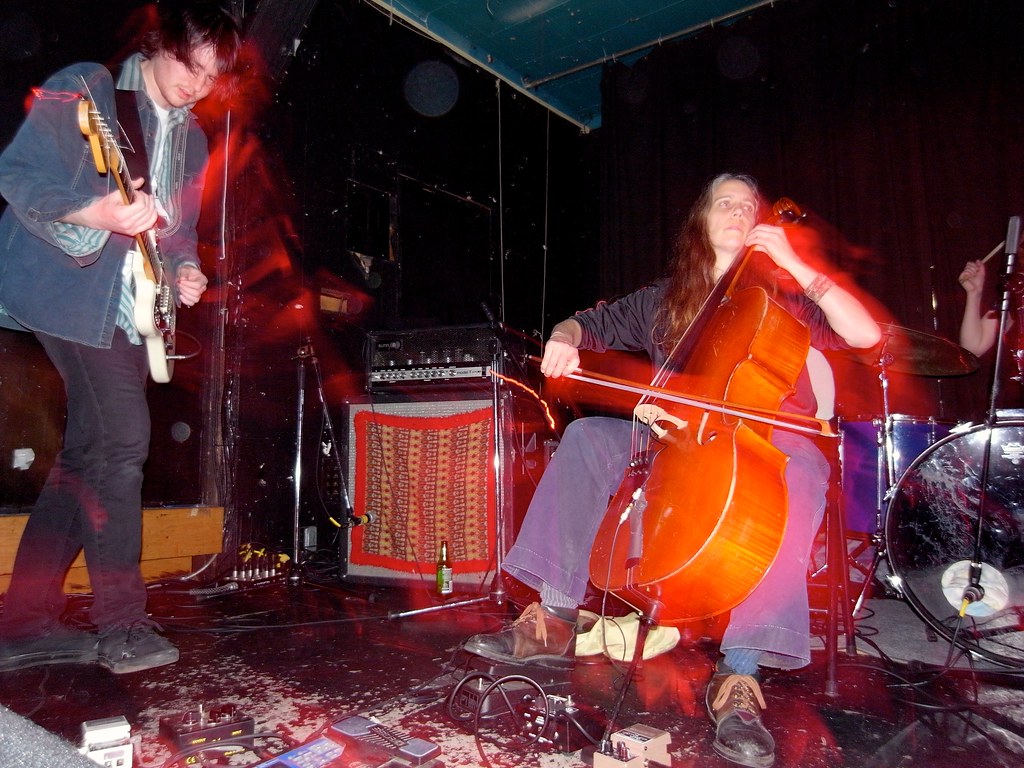
The timeline
1978–1979The Buddha basement
The scene ignites at the Smilin' Buddha (see our feature): D.O.A. and the Pointed Sticks learn to play in a Downtown Eastside basement, and Vancouver's punk frequency — faster, more political, more self-sufficient than the coasts' — is set. The first records, the first zines, the first van tours: the West Coast declares independence from the Toronto-Montreal axis.
The 1980s — Hardcore is born
Vancouver becomes a word in the global punk vocabulary: **D.O.A.'s *Hardcore '81*** christens the genre (see our features), and the decade builds the infrastructure — the bands (the Subhumans? — keep it clean: the era's wave of harder, faster acts), the venues, the connections to American and international hardcore. The West Coast strain is distinct: politically pointed, musically relentless, and deeply intertwined with the city's activist culture. Vancouver punk means something, and the world knows it.
The 1990s — The underground diversifies
Hardcore's second wave deepens (SNFU's Edmonton-to-Vancouver axis keeps the scene continental — see our SNFU feature), while the 90s add new colors: the garage-rock evangelism of the Smugglers (see our Mint feature), the noise and indie crossovers, and the scene's maturing infrastructure — all-ages spaces, touring networks, and the label ecosystem that Mint Records anchors. Vancouver's underground becomes a system, capable of sustaining careers rather than just scenes.
The 2000s — The revival years
A new generation re-discovers the tradition: the garage and punk revival wave (the Pointed Sticks canonized and reformed, the back-catalog reissued), the hardcore continuity (Nomeansno's long career carrying the torch — see our feature), and the crossovers into indie and metal. The Buddha's legacy gets its due: the city understands, finally, what the basement built.
The 2010s–present — The perpetual underground
Vancouver punk in the present tense: the venues still run, the all-ages spaces still incubate, the international connections still hum. The scene's constants endure — the DIY infrastructure, the political edge, the self-sufficiency — while new generations add their own frequencies. The Smilin' Buddha is gone? — keep it clean: The Buddha-era rooms are history, but the tradition is infrastructure now: unkillable, because it's built into the city's musical identity.
Why Vancouver punk matters
Vancouver punk matters because it named hardcore, sustained a forty-year underground without lapsing, and built the label (Mint) and the venue traditions that carried generations of West Coast musicians. It's the proof that a scene rooted in geography and conviction — rather than industry and fashion — can outlast all three. The basement closed. The frequency is permanent.
Frequently asked questions
Where did Vancouver punk start?
In the late-70s Smilin’ Buddha basement scene (see our feature) — birthplace of D.O.A. and the Pointed Sticks.
What did Vancouver contribute to hardcore?
D.O.A.’s Hardcore ’81 (see our feature) gave the faster, fiercer punk style its name — the genre’s christening.
Is there still a punk scene in Vancouver?
Yes — a continuous, multi-generational underground with venues, labels (Mint Records), and the same DIY infrastructure the Buddha era built.