First, the vocabulary
Chanson (or chanson québécoise) isn't just "a song in French." It's a craft tradition: lyric-first composition where the singer is the author, the poetry carries the music, and the subject is identity itself. The artists are chansonniers — a word with no clean English translation, somewhere between singer-songwriter and national poet.
The birth of a national songbook
Félix Leclerc (1914–1988) — the founding father
A working-class poet from La Tuque who scandalized polite society by writing songs about waitresses, farmers, and "Moi, mes souliers" — my shoes, the humblest possible subject. Leclerc proved French-Canadian identity could live in popular song, and European tours made him Quebec's first international cultural export.
Gilles Vigneault (born 1928) — the anthem writer
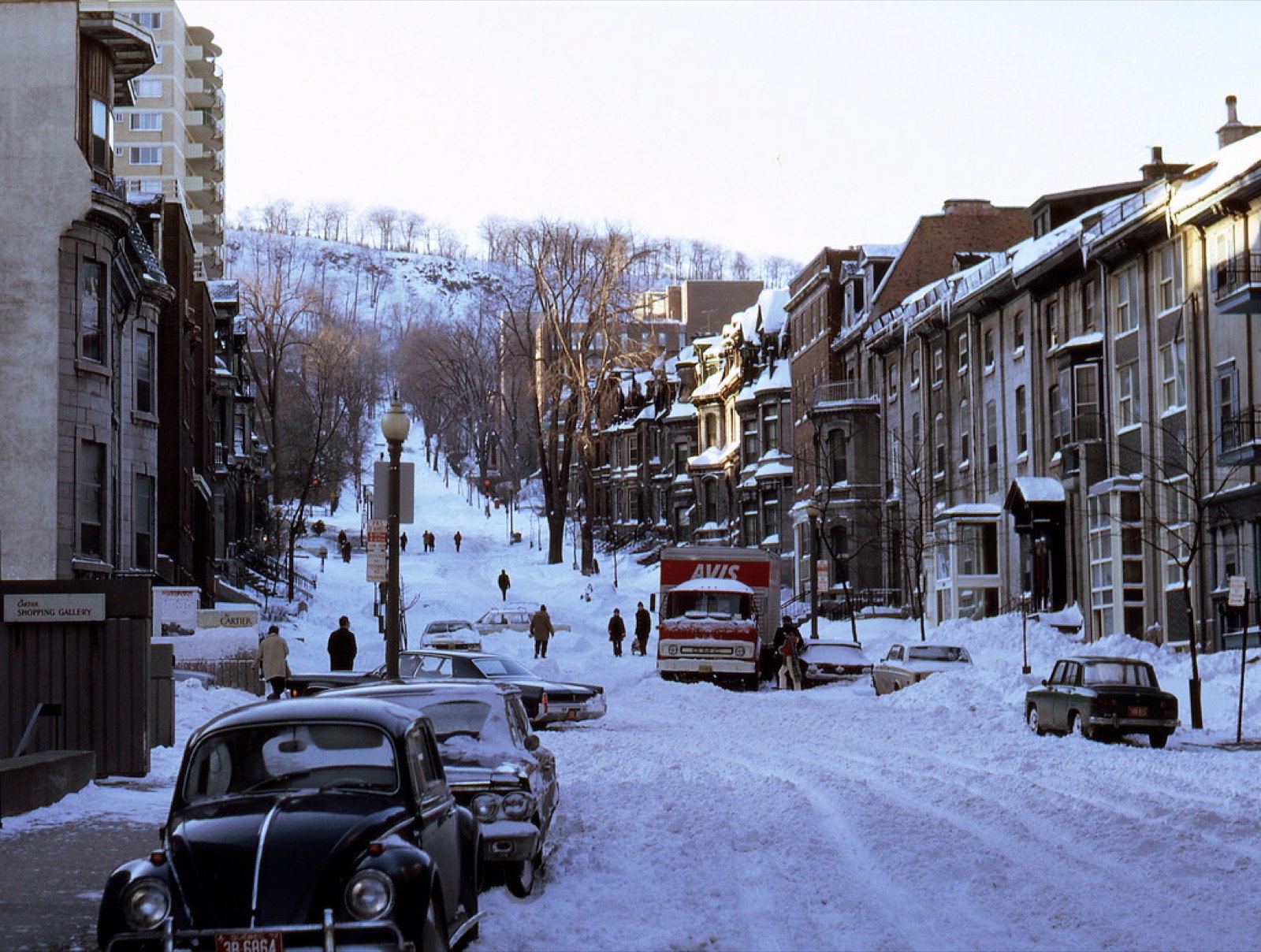
From Natashquan, on Quebec's Lower North Shore, Vigneault wrote "Mon pays" (1964) for a television special — a song that begins not with politics but with snow:
"Mon pays ce n'est pas un pays, c'est l'hiver." "My country is not a country, it's winter."
It became the unofficial anthem of Quebec, and one of the greatest winter songs ever written — by anyone, anywhere.
The Quiet Revolution generation (1960–1975)
As Quebec transformed itself in the 1960s, chanson turned electric and theatrical: Robert Charlebois electrified the Olympia in Paris ("Lindberg," 1968); Diane Dufresne brought theatre-stage drama; Plume Latraverse toured on a bicycle-built-for-two; Harmonium and Beau Dommage pushed the form into progressive folk-rock; Offenbach added blues swagger. The chansonniers weren't background music — they were the evening news, the debate club, and the church replacement, all at once.
How it crossed the language line
Quebec chanson influenced English Canada less through direct translation than through permission. Its lesson — that a songwriter could be specific, local, and proud, and still be universal — landed everywhere:
- Leonard Cohen, raised in Montreal's Westmount, absorbed the chansonnier model of the poet-performer before he ever wrote in English. His first book of poems came out in Montreal; his sensibility is bilingual even when his songs aren't.
- Joni Mitchell and Neil Young, both prairie kids, inherited the landscape-as-myth approach that Vigneault and Leclerc had pioneered in French.
- Gordon Lightfoot's Canadian railroad epics follow the chansonnier template: research-grade detail in service of national memory.
The through-line: before 1971's CanCon rules told English Canada to sing about Canada, Quebec had been doing it — brilliantly — for two decades.
The tradition today
Chanson never died; it multiplied:
- Les Cowboys Fringants — folk-punk raconteurs documenting modern Quebec one character at a time
- Cœur de pirate — Béatrice Martin's piano pop that carried chanson intimacy to the Francophone world's top charts
- Klo Pelgag — orchestral, theatrical, and utterly contemporary
- Les Sœurs Boulay — harmony-driven storytelling from the Gaspé
- Charlotte Cardin — Montreal's bilingual pop export, chanson phrasing wrapped in modern production
Meanwhile the classics never left: Gilles Vigneault still performs; "Mon pays" closes weddings and wakes; and every February, Quebec's ADISQ awards hand out trophies in a parallel universe where chanson is still the mainstream.
Why English Canada should care (a Q&A)
Q: I don't speak French. Where do I start? Start with the melody-first masters: Harmonium's Si on avait besoin d'une cinquième saison (an album that needs no translation), Beau Dommage's hooks, and Vigneault's "Mon pays." Then try Cœur de pirate's Blonde for the modern version.
Q: Is chanson the same as "French music"? No — it's specifically Quebec's singer-author tradition. France has its own chanson (Aznavour, Gainsbourg, Brassens), but Quebec chanson developed in isolation, tied to survival of a language and a culture. The emotional register is different: more winter, more community, more quiet defiance.
Q: Did chanson influence CanCon? Indirectly but profoundly. The CRTC's 1971 rules were partly a response to a country watching one of its founding nations sustain an entire music ecosystem in its own language. Quebec proved domestic content could be commercially and artistically viable.
Three chanson songs every Canadian should know
- "Mon pays" — Gilles Vigneault (1964). Six minutes of winter as homeland. If you only learn one French-Canadian song, learn this one — preferably before the next February cold snap.
- "Moi, mes souliers" — Félix Leclerc (1955). A masterpiece of humble detail: the story of a man, his shoes, and everything they carry. Proof the smallest subject can hold a nation.
- "Lindberg" — Robert Charlebois (1968). The electric shock — chanson plugged in, shouted, and aimed at the future. The moment the tradition stopped being polite.
Frequently asked questions
Who is the greatest chansonnier of all time?
Félix Leclerc is the consensus founding father; Gilles Vigneault the great anthem writer; Robert Charlebois the revolutionary. Most Quebec critics would name one of those three.
What does "chansonnier" mean?
A singer who writes their own material in the French tradition — the word carries connotations of poet, performer, and social commentator combined.
Is chanson still popular in Quebec?
Yes — dramatically so. Les Cowboys Fringants sell out arenas, Cœur de pirate headlines festivals across the Francophone world, and chanson-inflected acts regularly top Quebec charts.