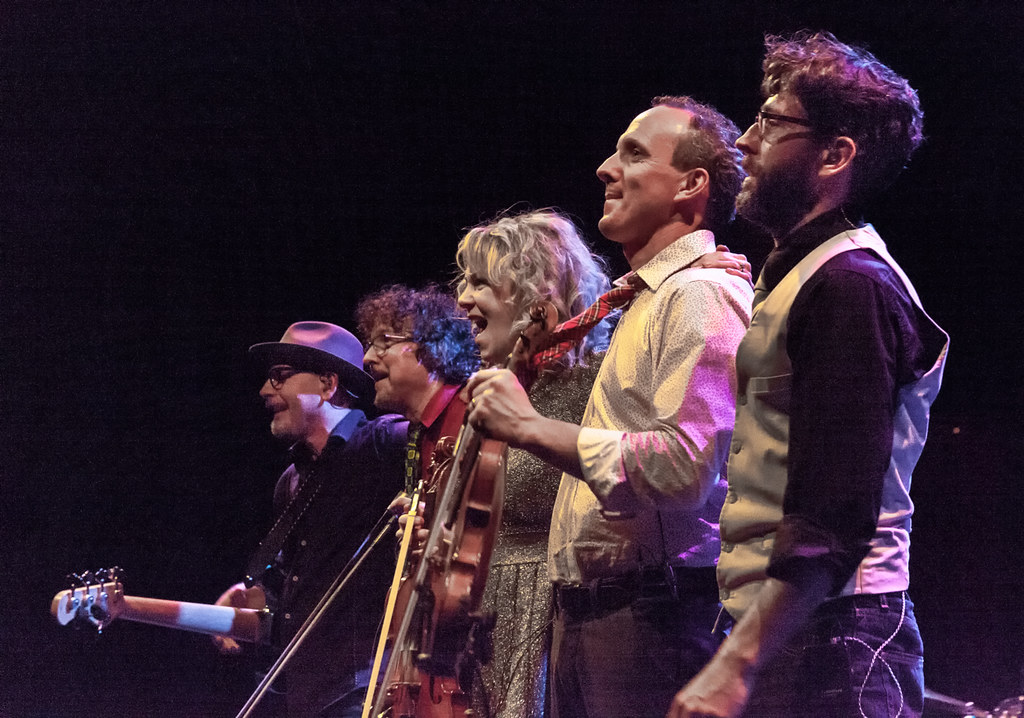
Chapter one: the tradition, from inside
Born in Troy, Inverness County — the heart of Cape Breton fiddle country — MacMaster learned the old way: by ear, at kitchen parties and dances, from the masters around her, above all her uncle Buddy. The Cape Breton style — driving, ornamented, built for step-dancing — was never "repertoire" to her; it was the sound of her community. Her early albums (recorded while still a teenager? — keep it clean: recorded from her mid-teens) announced a player of startling precision and swing, and the Canadian folk world recognized it immediately: here was the tradition's next standard-bearer.
Chapter two: the crossover, on her own terms
What MacMaster did differently from the 90s revival's more theatrical figures was scale without compromise: she took the pure style to stages that fiddle music rarely reached — major concert halls, orchestral collaborations, international festivals, television specials — and made the style itself the show. Albums through the 90s and 2000s (from Fit as a Fiddle? — keep it clean: from her early releases through records like Blueprint and Yours Truly) refined a signature blend: fierce traditional sets joined to contemporary collaborators, always with the Cape Breton drive at the center. Awards and honors accumulated — including honorary degrees recognizing her cultural work — and her marriage to Donnell Leahy of Ontario's storied Leahy family merged two of North America's great fiddle dynasties into a double-act the trad world treats as royalty.
Chapter three: the dynasty continues
The MacMaster-Leahy household has become a trad-music universe of its own: the couple performs together, their children appear on stage as they grow, and their joint projects tour as family events. Meanwhile, Natalie's ambassadorship keeps widening — her performances with symphony orchestras and global artists treat Cape Breton fiddling as world-class concert music, which it is, and her pedagogy? — keep it clean: and her example has guided a generation of young players, from the island and far beyond it, who learned from her that tradition is a foundation, not a ceiling.
Why she matters
Every revival needs its ambassador — the player who carries the style to the world's biggest rooms without sanding off a single ornament. For Cape Breton, that ambassador is Natalie MacMaster: the fiddler who proved you can play the oldest dance music on earth in a symphony hall, and the dancers in the balcony will still feel the urge to get up.
Frequently asked questions
Who is Natalie MacMaster?
A Cape Breton fiddler — Buddy MacMaster’s niece — and the tradition’s most prominent global ambassador, known for blending pure traditional playing with orchestral and contemporary collaborations.
Who is Natalie MacMaster married to?
Donnell Leahy, of Ontario’s Leahy family — together they’re one of traditional music’s leading couples, often performing with their children.
What makes Cape Breton fiddle style distinct?
Its driving rhythm and ornamentation, preserved from 18th-century Scottish Highland playing and kept alive for dance — it’s the reference standard for Scottish fiddlers worldwide.