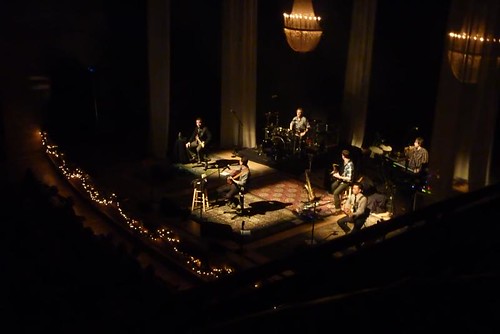
Chapter one: the form
The house concert's rules are beautifully simple: a host clears the living room (and often the dining room too? — keep it light: a host clears their space), invites their community (twenty to fifty people — the room sets the capacity), suggests a donation (the jar or the hat — the format's ancient payment system), and the artist plays two sets with an intermission — the folk-club format miniaturized into a home. The audience listens the way the room requires (conversation during the songs is impossible — the proximity polices itself), the host feeds the artist (the famous house-concert dinner — the circuit's real currency? — keep it light: the house dinner — the circuit's unofficial currency), and the evening ends with the artist sleeping in the guest room (the tour's accommodation solved, the relationship deepened). It is, functionally, the kitchen party (see our folk features) with a door charge — the oldest Canadian music format, running continuously.
Chapter two: the circuit's economics
For the working folk and roots artist (see our features), the house-concert circuit is economics solved: no venue split (the donation goes mostly to the artist), no sound system (the room is the PA — keep it light: the room provides the acoustics), no hotel (the guest room), and — crucially — a guaranteed attentive audience (the host's community arrives committed; nobody stumbles into a house concert by accident). The hosts are the circuit's heroes: the music-lovers (often retired, often rural — keep it light: the music-lovers across the country) who book the artists, fill the rooms, feed the travelers, and build, living room by living room, a national network that no industry spreadsheet knows exists (see our touring features). The artists keep lists of hosts; the hosts keep lists of artists; the lists are the circuit's real infrastructure — word of mouth, maintained by love.
Chapter three: why it endures
The house concert endures because it answers the streaming age's central hunger: real — the unamplified voice, the eye contact, the room where everyone can hear the guitar's wood (see our off-the-floor feature). Every technological shift toward abstraction (see our features) pushes a counter-current toward intimacy, and the house concert is that counter-current's home address — unkillable, unscalable, and perfect (the artists describe the circuit's best nights as the career's reward: the room where the songs land exactly as written). The living rooms of Canada host, on any given weekend, a shadow festival system — thousands of shows, no tickets printed, no phones up, the donation jar passed hand to hand. The music industry's future, some nights, looks exactly like its oldest past: a song, a room, and everyone listening.
Why it matters
It matters because the house concert is the floor of the live-music ecosystem — the circuit that exists when everything else fails (see our venues features), the format that pays songwriters when the rooms get too small for the market, and the last place the song itself is the whole show. Canada's songwriters cross the country living-room by living-room, and the country — twenty chairs at a time — keeps showing up. The door's open. Take off your shoes.
Frequently asked questions
What is a house concert?
A private living-room performance: a host invites ~20–50 guests, a donation supports the artist, and the show runs two sets with a supper in between — the folk-club format at home.
How do artists make money on house concerts?
The suggested donation goes mostly to the artist, plus dinner and a guest room — the format solves the touring economics that venues can't (see our touring features).
How do I find house concerts?
Through hosts' and artists' mailing lists and word of mouth — the circuit runs on personal networks rather than ticketing platforms.